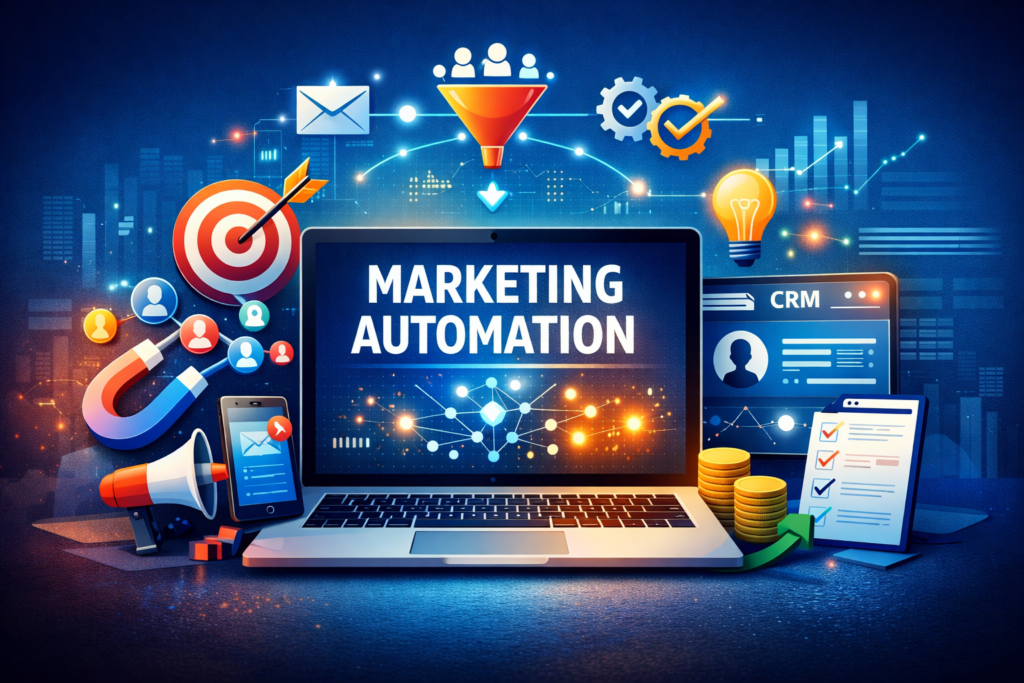
In today’s hyper-connected world, speed, personalization, and efficiency define business success. For growing brands and startups, implementing marketing automation for small businesses is no longer optional—it is a strategic necessity. With increasing competition and limited internal resources, small teams must leverage smart systems to stay competitive. A well-structured digital marketing automation strategy enables businesses to streamline processes, nurture leads, and deliver consistent customer communication at scale.
The modern buyer expects quick responses, relevant messaging, and seamless experiences across channels. Without automation, managing these expectations manually becomes overwhelming. That’s where intelligent automation tools transform operations and create measurable growth opportunities.
What Is Marketing Automation?
At its core, marketing automation for small businesses refers to the use of software platforms and technologies to automate repetitive marketing activities. These include email campaigns, customer segmentation, follow-ups, lead tracking, and performance reporting.
Instead of manually sending emails or updating spreadsheets, businesses use small business automation tools to create predefined workflows. For example, when a visitor fills out a website form, the system can automatically send a welcome email, notify the sales team, and assign the lead within the CRM.
This structured approach reduces workload while improving efficiency. More importantly, it ensures that no opportunity is lost due to delayed responses or human oversight.
Why Small Businesses Need Digital Marketing Automation
Small businesses often operate with limited staff and tight budgets. Investing in digital marketing automation helps maximize productivity without increasing headcount. Automation allows companies to:
-
Respond instantly to inquiries
-
Segment audiences based on behavior
-
Deliver personalized email sequences
-
Track campaign performance in real time
By integrating CRM integration for marketing with automation systems, businesses gain full visibility into the customer journey. Every interaction—from the first website visit to the final purchase—is recorded and optimized.
This data-driven approach enables better decision-making and improves overall marketing ROI.
Key Benefits of Marketing Automation for Small Businesses
1. Improved Lead Management
One of the biggest advantages of automated lead generation is ensuring that no prospect is overlooked. Automation tools capture leads from landing pages, social media ads, and website forms, then route them directly into the CRM.
Using lead nurturing automation, businesses can send targeted content based on user interests and behavior. This structured follow-up significantly increases the chances of conversion.
2. Higher Conversion Rates
With personalized messaging powered by email marketing automation, businesses can deliver the right message at the right time. Instead of generic mass emails, customers receive relevant content tailored to their needs.
When combined with conversion rate optimization tools, automation helps identify what messaging works best and refines campaigns for maximum impact.
3. Enhanced Customer Experience
Customer experience plays a crucial role in retention. Through customer journey automation, businesses create seamless communication flows across multiple touchpoints.
For example, after a purchase, automated systems can send thank-you emails, feedback requests, or cross-sell recommendations. This consistency builds trust and long-term loyalty.
4. Increased Productivity and Efficiency
Manual marketing tasks consume valuable time. By implementing workflow automation for businesses, repetitive tasks such as scheduling posts, sending reminders, and updating lead statuses become automated.
This allows teams to focus on strategy, creativity, and revenue-generating activities instead of administrative work.
Automation and Lead Generation Strategy
A strong automated lead generation system begins with optimized landing pages and clear calls to action. When visitors submit their details, automation tools trigger a predefined workflow.
For example:
-
Immediate confirmation email
-
Lead scoring based on engagement
-
Sales team notification
-
Scheduled follow-up sequence
This systematic process ensures timely engagement. Studies consistently show that faster lead response times significantly improve closing rates. By integrating lead nurturing automation, businesses guide prospects through each stage of the funnel until they are ready to purchase.
Integrating Automation with CRM and Content Marketing
To maximize effectiveness, digital marketing automation should be integrated with CRM platforms and content strategies. Through proper CRM integration for marketing, businesses can:
-
Track user behavior
-
Segment audiences dynamically
-
Personalize content delivery
-
Monitor lifecycle stages
Content marketing becomes more powerful when combined with automation. Blog posts, eBooks, webinars, and email sequences can be delivered automatically based on customer interests. This synergy improves engagement and accelerates sales cycles.
Measuring Automation Performance
Tracking performance is critical for long-term success. Effective marketing automation for small businesses requires ongoing optimization.
Key metrics include:
-
Lead response time
-
Email open and click-through rates
-
Conversion rates
-
Customer acquisition cost
-
Customer lifetime value
Using conversion rate optimization tools, businesses can analyze data, identify bottlenecks, and refine workflows. Continuous improvement ensures that automation aligns with overall business objectives.
Common Challenges and How to Overcome Them
While digital marketing automation offers immense benefits, implementation requires planning. Common challenges include:
-
Choosing the right platform
-
Setting up accurate workflows
-
Maintaining clean data
-
Aligning marketing and sales teams
To overcome these issues, businesses should start small. Begin with basic email marketing automation sequences and gradually expand to advanced customer journey automation strategies. Proper team training and regular performance audits also improve results.
Future of Marketing Automation
The future of marketing automation for small businesses lies in artificial intelligence and predictive analytics. AI-powered systems can analyze customer behavior, forecast trends, and suggest personalized actions automatically.
As automation tools evolve, businesses will rely more heavily on workflow automation for businesses to stay competitive in crowded markets. Those who adopt early and optimize continuously will achieve sustainable growth.
Conclusion
In a rapidly evolving digital environment, marketing automation for small businesses is a growth engine rather than just a convenience. By implementing structured digital marketing automation systems, businesses can streamline operations, nurture leads effectively, and deliver consistent customer experiences.
From automated lead generation and lead nurturing automation to CRM integration for marketing and conversion rate optimization tools, automation empowers small teams to operate with enterprise-level efficiency.
Companies that invest in smart small business automation tools today position themselves for scalable success tomorrow. With the right strategy, continuous monitoring, and optimization, automation becomes a powerful driver of productivity, profitability, and long-term brand growth.