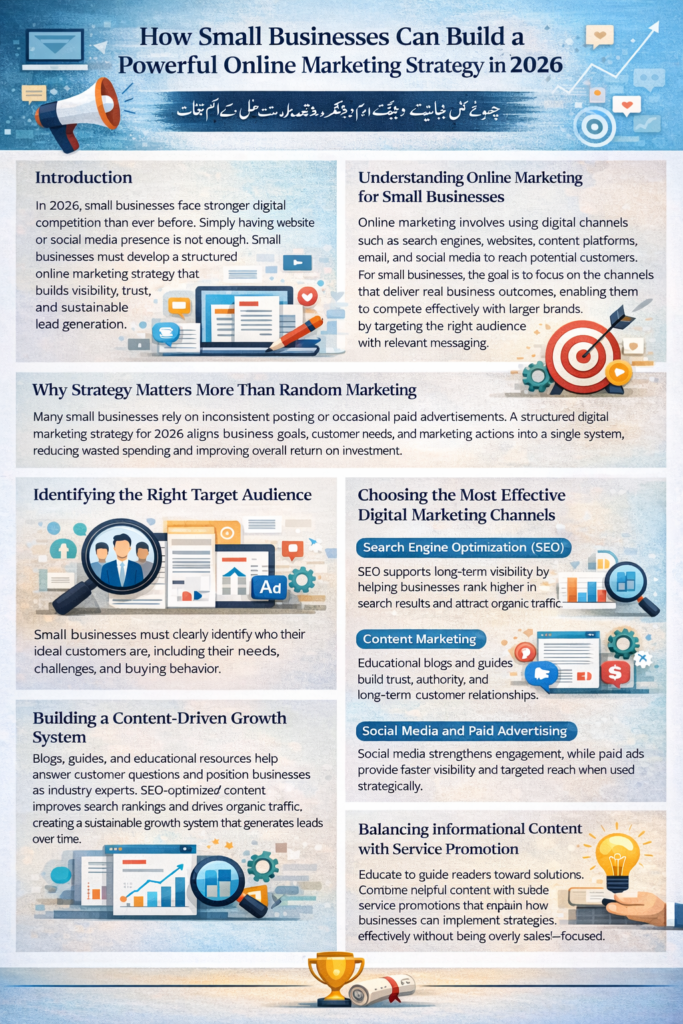
In 2026, small businesses face stronger digital competition than ever before. Simply having a website or social media presence is no longer enough to attract customers or drive consistent growth. To succeed, small businesses must develop a structured, results-focused online marketing strategy that builds visibility, trust, and sustainable lead generation. This guide explains how small companies can create a powerful digital presence while keeping costs controlled and performance measurable.
H2: Understanding Online Marketing for Small Businesses
Online marketing involves using digital channels such as search engines, websites, content platforms, email, and social media to reach potential customers. For small businesses, the goal is not to be present on every platform but to focus on the channels that deliver real business results. A clear online marketing plan allows small companies to compete effectively with larger brands by targeting the right audience with relevant and timely messaging.
H2: Why Strategy Matters More Than Random Marketing
Many small businesses rely on inconsistent posting or occasional paid advertisements. While these efforts may generate short-term attention, they rarely deliver long-term growth. A structured digital marketing strategy for 2026 aligns business goals, customer needs, and marketing activities into one system. This strategic approach reduces wasted spending, improves consistency, and increases overall return on investment.
H2: Identifying the Right Target Audience
Understanding the target audience is the foundation of any successful online marketing strategy for small businesses.
H3: Define Your Ideal Customer
Small businesses must clearly define their ideal customers, including their needs, challenges, preferences, and buying behavior. Knowing who you want to attract helps create focused messaging and relevant offers.
H3: Understand Customer Search Intent
By analyzing how customers search for solutions online, businesses can create content that matches user intent. This approach attracts high-quality traffic that is more likely to convert, rather than irrelevant visitors.
H2: Choosing the Most Effective Digital Marketing Channels
Not all digital marketing channels deliver the same results for small businesses. Selecting the right mix is essential for efficiency and growth.
H3: Search Engine Optimization (SEO)
SEO supports long-term visibility by helping businesses rank higher in search engine results. Strong SEO brings consistent organic traffic and reduces dependency on paid advertising.
H3: Content Marketing
Educational blogs, guides, and resources build trust and authority. Content marketing helps small businesses position themselves as experts while nurturing long-term customer relationships.
H3: Social Media and Paid Advertising
Social media platforms strengthen engagement and brand awareness, while paid advertising provides faster visibility and targeted reach when used strategically and with clear objectives.
H2: Building a Content-Driven Growth System
Content is a core component of a successful online marketing strategy for small businesses. Blogs, guides, and educational content answer customer questions and solve real problems. SEO-optimized content improves search rankings and drives organic traffic, creating a sustainable growth system that generates leads over time.
H2: The Role of Automation and CRM Tools
Marketing automation allows small businesses to scale their efforts efficiently without increasing workload.
H3: Marketing Automation
Automated follow-ups, email sequences, and lead nurturing improve response time and increase conversion rates while saving time and resources.
H3: CRM Systems
CRM tools help businesses manage leads, track customer interactions, and maintain consistent communication, resulting in a better overall customer experience.
H2: Measuring Performance and Optimizing Results
Tracking performance is essential for long-term success. Small businesses should monitor website traffic, lead conversions, engagement metrics, and return on investment. Data-driven insights reveal what is working and where improvements are needed, ensuring marketing efforts remain aligned with business goals.
H2: Balancing Informational Content with Service Promotion
Effective content does more than educate—it guides readers toward solutions. Informational content builds trust, while subtle service promotion explains how businesses can implement strategies effectively without appearing overly sales-focused.
H2: Conclusion
In 2026, small businesses that invest in a structured and data-driven digital marketing strategy gain a strong competitive advantage. By focusing on the right audience, effective channels, quality content, and automation tools, small companies can achieve sustainable growth. A strategic approach transforms online marketing from a short-term expense into a long-term business asset.