

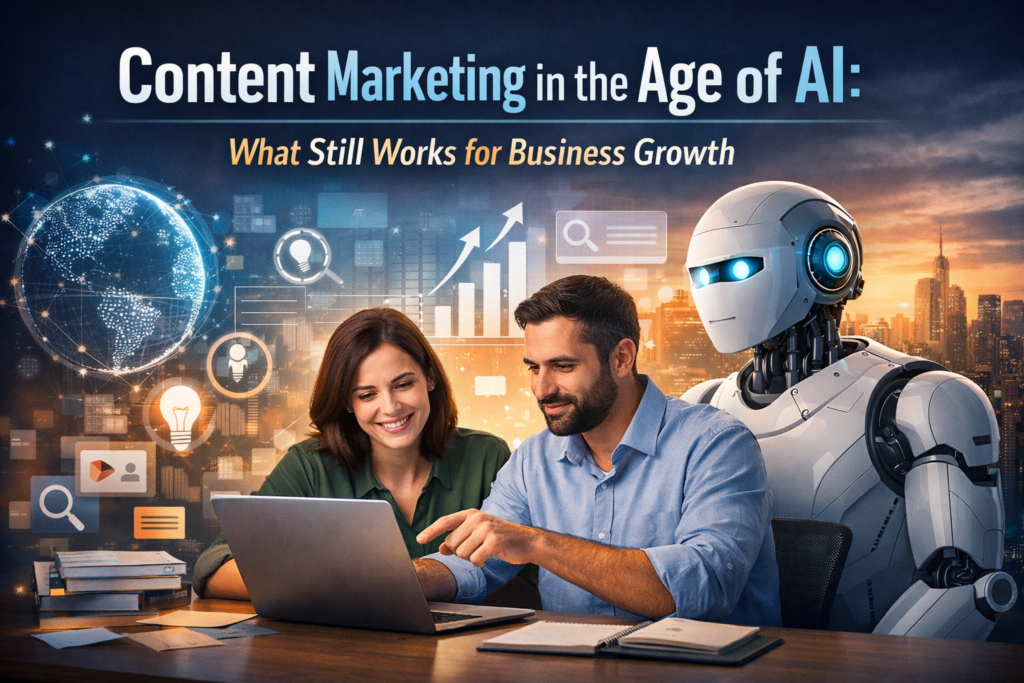
The rise of artificial intelligence has transformed the way businesses plan, create, and distribute content. From automated blog writing to AI-powered social media scheduling, modern tools have made content production faster than ever. Yet, despite this technological progress, Content Marketing in the Age of AI still depends on one timeless principle: delivering meaningful value to real people. Businesses that recognize this are not just chasing traffic—they are building trust, authority, and sustainable success.
In 2026, content marketing is no longer about publishing large volumes of generic material. Instead, it focuses on relevance, authenticity, and strategic intent. Companies that align AI efficiency with human insight are seeing the strongest results in content marketing for business growth.
How AI Has Changed Content Marketing
AI content marketing has reshaped how marketers approach planning and execution. Tasks that once took days—such as keyword research, topic ideation, and performance analysis—can now be completed in minutes. AI tools assist in identifying trends, optimizing headlines, and analyzing audience behavior with remarkable accuracy.
However, speed alone does not guarantee impact. Search engines and users have become smarter. Algorithms now prioritize originality, depth, and usefulness over mass-produced content. Businesses that rely entirely on automation often struggle with low engagement, poor rankings, and weak brand perception. This shift highlights the importance of combining AI with a clear content marketing strategy.
Why Human-Centered Content Still Wins
Despite automation, human-centered content continues to outperform purely AI-generated material. Audiences want content that understands their challenges, speaks their language, and offers practical solutions. Emotional intelligence, real-world experience, and storytelling remain difficult for AI to replicate fully.
Human-driven content creates credibility and fosters stronger relationships. Case studies, expert insights, and experience-based blogs help brands connect on a deeper level. When users feel understood, they are more likely to engage, share, and trust a business—key drivers of long-term success in digital content marketing.
Building Trust Through Content Marketing
Modern content marketing services focus on education rather than direct selling. Informative blogs, in-depth guides, whitepapers, and thought leadership content allow businesses to demonstrate expertise without aggressive promotion. This approach naturally builds brand authority over time.
When audiences consistently find helpful and accurate information, trust develops organically. Trust leads to longer session times, repeat visitors, and higher conversion rates. In competitive markets, trust is often the deciding factor between a one-time visitor and a loyal customer.
SEO and Content: A Powerful Combination
SEO and content marketing are no longer separate strategies. A strong SEO content strategy ensures that high-quality content reaches the right audience at the right time. In 2026, search engines prioritize content that aligns with user needs and demonstrates expertise, experience, authority, and trustworthiness.
Effective search intent optimization means understanding why users search for specific topics and delivering content that answers their questions clearly. Long-form, well-structured articles with logical headings, internal linking, and natural keyword placement perform significantly better than shallow content created only for rankings.
Thought Leadership as a Growth Driver
One of the most effective ways to stand out in the age of AI is through thought leadership content. Sharing original perspectives, industry insights, and future-focused ideas positions businesses as leaders rather than followers. Thought leadership builds credibility and encourages audiences to see a brand as a trusted advisor.
Unlike generic AI-generated content, thought leadership reflects real expertise and strategic thinking. It strengthens brand identity and supports long-term engagement across multiple platforms.
Using AI the Right Way in Content Strategy
The most successful businesses treat AI as a support system, not a replacement. AI excels at research, optimization, and performance tracking. Humans excel at creativity, storytelling, and decision-making. When combined, this balance creates highly effective digital content marketing campaigns.
AI helps marketers scale efficiently, while human oversight ensures authenticity and relevance. This hybrid approach protects brand voice and enhances overall content quality.
Content Marketing for Long-Term Business Growth
Content marketing is a long-term investment, not a quick win. Businesses that publish consistent, high-quality content benefit from sustained organic traffic, stronger audience relationships, and reduced dependency on paid advertising. Over time, this leads to predictable revenue and long-term business growth.
Well-planned content continues to deliver value long after publication. Evergreen articles, guides, and resources act as digital assets that compound results year after year.
Conclusion
In Content Marketing in the Age of AI, technology has changed how content is produced—but not why it matters. Content that is helpful, authentic, and audience-focused will always outperform content created purely for speed. Businesses that align AI efficiency with human insight are best positioned for content marketing for business growth in 2026 and beyond.